Gemini 3.8 Is Another Sign the Search Query Is Becoming a Conversation
Summarize with AI
Opens your chosen AI platform in a new tab. Sign-in may be required; article access and summaries vary by platform.
Key Insights
- Gemini 3.8 reinforces the shift from isolated queries toward contextual, multimodal search conversations.
- Brands need to measure whether they remain visible as a user moves from discovery through comparison and decision.
- Prompt tracking will evolve into journey tracking across intent stages, follow-up questions and changing recommendation criteria.
- Citations matter, but meaningful AI visibility also depends on brand understanding, consideration and recommendation.
- The strongest response combines traditional SEO foundations with broader decision intelligence across owned, controlled and third-party surfaces.
For more than two decades, search had a familiar structure.
A user typed a query.
Google returned a list of results.
The user clicked a link.
Brands competed for rankings, clicks and traffic.
AI search has already changed that behaviour significantly. Users can now ask questions in natural language, receive synthesized answers, compare products inside an AI response and continue asking follow-up questions without starting another search.
Google's latest Gemini 3.8 releases push this transition further.
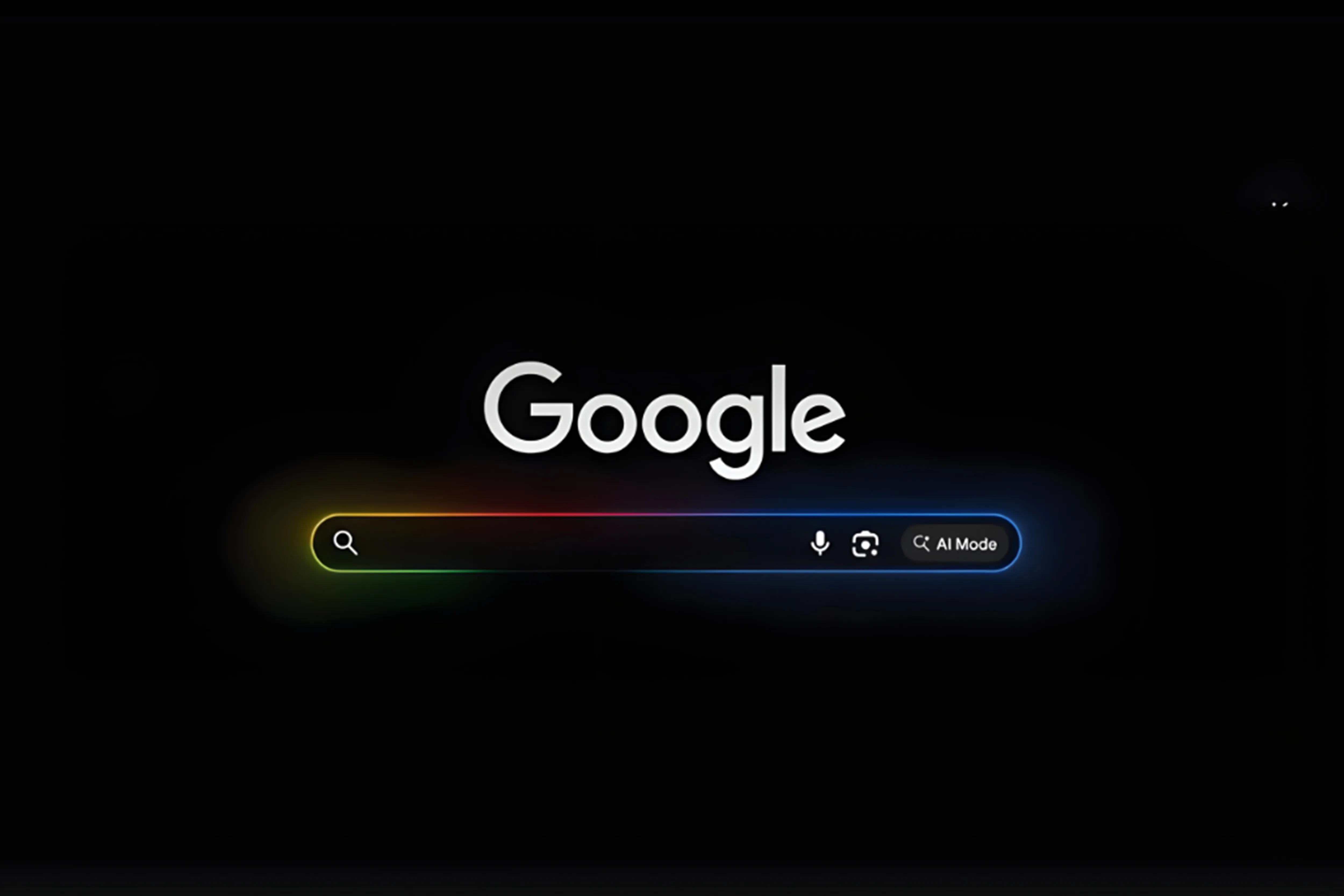
Earlier this month, Google introduced Gemini 3.8 Flash and made it available inside AI Mode for Google AI Pro and Ultra subscribers. Google followed this with Gemini 3.8 Live and Gemini 3.8 Live Extended Thinking, models designed for real-time conversations, multimodal understanding and more complex reasoning.
Taken individually, these are model updates.
Taken together, they point towards something much bigger.
The search query is gradually becoming less important than the search conversation.
And for brands, that could fundamentally change what it means to be visible in search.
From Search Results to AI Answers to AI Conversations
The first major change in AI search was relatively easy to understand.
Instead of receiving ten blue links, users increasingly received an answer.
That introduced a new challenge for brands.
It was no longer enough to rank on Google. Brands also had to appear within AI-generated answers, recommendations and citations.
The journey started looking something like this:
Keyword → Search Result → Website
then increasingly:
Prompt → AI Answer → Citation → Website
But Gemini 3.8 Live suggests the next evolution could look different again.
Consider a user looking for a pair of running shoes.
The traditional search journey might begin with:
“Best running shoes for flat feet”
The AI search journey can become:
“I need running shoes for flat feet under ₹10,000.”
Followed by:
“I mostly run on roads.”
Then:
“I run around 20 kilometres every week.”
Then perhaps the user turns on their camera and shows the shoes they currently use.
Then:
“These are the shoes I currently have. What should I upgrade to?”
Then:
“Compare the top three options.”
Then:
“Which one would you choose if comfort matters more than speed?”
Then:
“Where can I buy it?”
There may no longer be one definitive search query.
There is a sequence of signals that gradually reveals intent.
Search becomes a conversation.
Why Gemini 3.8 Matters for Search
There are several parts of Google's Gemini 3.8 releases that matter from a search perspective.
1. Better Multi-Step Reasoning
Gemini 3.8 Flash is designed to improve performance on complex and multi-step reasoning.
This matters because many commercial searches are not actually single questions.
Someone searching for a skincare product might begin with:
“Best face serum for pigmentation.”
But their real decision requires several additional factors:
- Skin type
- Budget
- Ingredients
- Sensitivity
- Reviews
- Brand trust
- Availability
- Delivery
- Alternatives
- Compatibility with other products
An AI system capable of reasoning across multiple steps can progressively narrow the recommendation.
This means brands are not simply trying to appear in an initial answer.
They may need to remain relevant as the AI continues filtering options.
2. Search Is Becoming More Multimodal
Gemini 3.8 Live can work across audio, video, images and text.
That creates search experiences that were difficult to imagine within the traditional keyword model.
A consumer could show an AI assistant:
- A damaged appliance
- Their current skincare product
- A room they want to redecorate
- A pair of running shoes
- A laptop specification sheet
- A food label
- A car dashboard warning
Instead of describing the problem perfectly, the user can simply show it.
The AI can understand the context and continue the conversation.
The implication is important.
Brands will increasingly need to think beyond the exact words users type.
Search engines may understand the user's situation before a traditional keyword ever appears.
3. Voice Search Becomes More Conversational
Voice search is not new.
But historically, voice search often behaved like spoken keyword search.
The user asked a question and received an answer.
Real-time conversational AI changes the experience.
The user can interrupt.
Clarify.
Add context.
Change requirements.
Ask the AI to compare alternatives.
Continue discussing the recommendation.
This turns voice from another input format into a genuine decision interface.
4. AI Search Is Becoming More Agentic
Google is also increasingly building Gemini around agentic workflows and tool use.
This direction matters even more than whether the AI answer itself improves.
Search has historically helped users discover where they should go next.
Agentic AI can increasingly help users complete the next step.
The future journey could look like:
Discover → Compare → Validate → Decide → Act
without requiring the user to manually repeat the research process across multiple websites.
That changes the role of visibility.
Being discoverable at the beginning of the journey remains important.
Being considered when the AI moves closer to a decision may become even more important.
The Biggest Change: Brands Are Competing Across a Decision Journey
Search marketing has traditionally been organized around queries.
Find the keyword.
Understand search volume.
Create the page.
Build authority.
Improve rankings.
Measure traffic.
AI search requires a different mental model.
Imagine someone researching a credit card.
They might begin with:
“Best credit card for travel in India.”
The AI names several cards.
The user then asks:
“Which ones have international lounge access?”
Some options disappear.
Then:
“I spend around ₹80,000 every month.”
The recommendation changes again.
Then:
“I don't want a very high annual fee.”
The shortlist gets smaller.
Then:
“Compare Card A and Card B based on my spending.”
At which point the search has moved from discovery to decision.
A brand might appear in the first response but disappear by the fourth.
Another brand might not dominate the broad discovery question but become the strongest recommendation once purchase criteria become clearer.
This is why measuring AI search visibility only through one prompt can become misleading.
The real question is increasingly:
Does your brand remain visible throughout the decision journey?
AI Visibility Cannot Be Reduced to One Percentage
This is also why the AI search industry will have to move beyond overly simplified visibility metrics.
Imagine a brand appears in 70 out of 100 informational prompts.
Its AI visibility might look excellent.
But now imagine it appears in only 10 out of 100 high-intent recommendation prompts.
Its actual commercial visibility may be much weaker than the topline number suggests.
The opposite can also happen.
A brand may not appear frequently in broad category education questions but may consistently be recommended when users demonstrate strong buying intent.
Those are very different visibility profiles.
Brands therefore need to understand not only:
Are we appearing?
but also:
Where are we appearing?
Why are we appearing?
At which stage of the consumer journey are we appearing?
Which competitors replace us as intent becomes clearer?
Which sources are influencing the AI's recommendation?
What information is causing the model to include or exclude us?
That is where AI search measurement becomes much more interesting.
Rankings Will Become More Dynamic
Another implication of increasingly capable models is that visibility can change even when the brand itself has changed nothing.
Traditional Google rankings were never completely static.
But AI answers introduce additional variability.
Different models may reason differently.
Different prompts may trigger different sources.
Small changes in context can change recommendations.
Follow-up questions can completely reorder the competitive set.
A brand might perform strongly for:
“Best protein supplement brands in India.”
but poorly for:
“Best protein supplement brand for a vegetarian beginner who wants something under ₹2,000.”
The difference between those prompts is not merely keyword variation.
It is context.
This means AI search monitoring needs to capture a much larger universe of intent.
Prompt Tracking Needs to Become Journey Tracking
Most current AI visibility tools still borrow heavily from traditional rank tracking.
Enter a list of prompts.
Run them periodically.
Track which brands appeared.
Calculate visibility.
This is useful, but conversational search will require something more sophisticated.
Instead of tracking only isolated prompts, brands may eventually need to track prompt journeys.
For example:
Discovery
“What are the best home air purifiers in India?”
Consideration
“Which ones are good for Delhi pollution?”
Requirement Refinement
“I need one for a 400 sq ft bedroom.”
Comparison
“Compare Brand A, Brand B and Brand C.”
Objection
“Which has the lowest filter replacement cost?”
Decision
“Which one would you recommend for my use case?”
The important metric is no longer simply whether Brand A appeared.
It is where Brand A entered the conversation, how long it remained in consideration and what caused it to disappear or win stronger consideration.
That creates an entirely new layer of search intelligence.
The DareAISearch POV
At DareAISearch, we believe developments like Gemini 3.8 reinforce a shift we have been building towards from the beginning.
The future of search optimization will not be about optimizing individual keywords or even individual prompts. It will be about understanding and influencing the complete digital decision journey.
There are a few important implications.
1. Discovery and Decision Visibility Need to Be Measured Separately
A brand being mentioned is not automatically meaningful.
The intent behind that mention matters.
Being present when someone asks:
“What is term insurance?”
is different from being present when someone asks:
“Which term insurance provider should I choose for ₹2 crore coverage?”
Both are valuable.
But they represent very different stages of the journey.
This is why DareAISearch looks at visibility across different intent stages rather than treating every prompt equally.
As AI conversations become longer and more contextual, this distinction becomes even more important.
2. Brands Need a Prompt Universe, Not a Prompt List
A static list of 50 or 100 prompts cannot fully represent how consumers interact with conversational AI.
Brands need to understand the wider universe surrounding their category.
That includes:
- Discovery prompts
- Educational prompts
- Problem-based prompts
- Use-case prompts
- Comparison prompts
- Brand-versus-brand prompts
- Price prompts
- Review prompts
- Recommendation prompts
- Purchase-intent prompts
- Location-based prompts
- Follow-up questions
The objective is to model how real users move through the category.
Not simply how marketers imagine they search.
3. Citations Are Only One Part of AI Visibility
Citation analysis is important.
Brands should understand which websites, publishers and sources AI engines repeatedly rely upon.
But the future of AI search cannot be reduced to citations alone.
The bigger picture includes:
Brand Mention → Brand Understanding → Brand Consideration → Brand Recommendation
A brand can be understood by an AI system without receiving a direct website citation every time.
Likewise, being cited does not necessarily mean the brand is being recommended.
The real objective is to understand the relationship between sources, brand perception and final recommendations.
4. Visibility Needs to Be Connected With Execution
Measurement alone does not improve AI visibility.
Once a gap is identified, brands need to understand what to change.
Sometimes that means improving the brand's own website.
Sometimes it means creating better category content.
Sometimes product information is incomplete.
Sometimes YouTube is influencing the category.
Sometimes third-party publishers matter more.
Sometimes Reddit discussions are shaping perception.
Sometimes Google Business Profiles matter.
Sometimes marketplace listings become critical.
The execution layer therefore needs to extend beyond traditional website SEO.
At DareAISearch, we think about this through three broad surfaces:
Owned
Assets controlled directly by the brand, including the website and content.
Controlled
Profiles and platforms where the brand controls its presence but not the ecosystem.
Third Party
Publishers, communities, creators, discussions and other sources influencing how AI systems understand the category.
The objective is not to manipulate an AI answer.
The objective is to build the strongest possible digital evidence for why a brand deserves to be considered.
5. AI Search Will Ultimately Require Decision Intelligence
The amount of data involved is becoming too large for teams to manually interpret.
Hundreds of prompts.
Multiple AI engines.
Multiple search surfaces.
Thousands of citations.
Different competitors.
Different stages of intent.
Different geographies.
Different products.
Different recommendation patterns.
Then constant model updates on top of everything else.
The next generation of AI search platforms therefore cannot simply provide dashboards.
They need intelligence capable of understanding the signals and recommending what brands should do next.
That is where we believe AI Search is heading.
From:
Measurement
to
Understanding
to
Recommendations
to
Execution
to
Learning from outcomes
and back again.
That continuous intelligence loop is significantly more valuable than another ranking report.
What Should Brands Do Now?
Gemini 3.8 does not mean brands should suddenly abandon traditional SEO.
Quite the opposite.
Strong websites, structured information, authoritative content, technical accessibility, brand reputation and credible third-party signals remain fundamental inputs into how brands are discovered and understood.
But the measurement framework needs to expand.
Brands should start asking:
What questions do consumers ask before they know our category?
Which prompts introduce brands into consideration?
Which follow-up questions remove us from consideration?
Which competitors repeatedly appear alongside us?
What reasons do AI systems provide when recommending them?
Which sources influence those recommendations?
Does our visibility improve or weaken as intent moves closer to purchase?
Are our product, pricing and category signals consistent across the web?
Are we visible across Google, ChatGPT, Gemini, YouTube, marketplaces and other discovery surfaces?
Those questions are becoming just as important as traditional rankings.
SEO Is Not Disappearing. Search Is Expanding.
Every major change in search tends to produce the same prediction.
SEO is dead.
It rarely is.
The better way to understand what is happening is that the surface area of search is expanding.
Users still type keywords.
They also ask AI systems questions.
They speak to assistants.
They upload images.
They show cameras.
They ask follow-up questions.
They compare products.
They ask for recommendations.
And increasingly, they may allow AI systems to complete parts of the journey for them.
Brands therefore need to become discoverable across all of these behaviours.
The companies that adapt fastest will not be the ones trying to find a new trick for ranking inside one AI engine.
They will be the ones that understand how machines interpret their brand across the entire search ecosystem.
Search Is Becoming a Decision Layer
Gemini 3.8 is significant not because it gives marketers another model name to track.
It is significant because it provides another glimpse into where search interfaces are heading.
From queries to conversations.
From text to multimodal context.
From retrieval to reasoning.
From answers to actions.
From search engines to decision engines.
For brands, the challenge is therefore changing.
The question is no longer simply:
“Do we rank?”
It is becoming:
“When AI helps a consumer make a decision in our category, does our brand become part of that decision?”
That is the question the next generation of search teams will need to answer.
And it is the problem we are building DareAISearch to solve.
DareAISearch is building the operating system for AI-driven brand discovery and decisions, helping brands measure how they appear across search surfaces, understand why AI systems recommend competitors, identify the actions that can improve visibility and ultimately deploy those improvements across the digital ecosystem.
Upgrade your SEO to GEO in 2026
Book A DemoWant to create your own llms.txt file?
Use the free DareAISearch llms.txt Generator to create an upload-ready file for your website in minutes.
Related Reads
Google Is Making AI Search Links More Visible. Here's What It Means for Brands.
7 min readAI SearchFestive Shopping Is Becoming AI-Led: What Indian D2C Brands Should Do Now
13 min readAI SearchGoogle Search Console Can Now Measure Multimodal Search: Why Visual Discovery Just Became a First-Class SEO Metric
8 min readAI SearchChatGPT Changed What It Cites: Why Building GEO Around Any One Source Is Dangerous
12 min readCheck Your AI Search Visibility
Find out how your brand appears across ChatGPT, Gemini, Perplexity, and Google AI Overviews.