Google Search Console Now Tracks Instagram, TikTok, X and YouTube: What It Means for Brand Discovery
Summarize with AI
Opens your chosen AI platform in a new tab. Sign-in may be required; article access and summaries vary by platform.
Key Insights
- On July 7, 2026, Google introduced Platform Properties in Search Console, a new property type that lets brands, creators, and publishers track how their Instagram, TikTok, X, and YouTube content performs on Google Search, Discover, and News. This expands Search Console beyond websites and treats social and video posts as measurable search assets. Once a platform property is added and verified, teams see Performance reports (clicks, impressions, CTR, position, top posts, top queries), Insights, and Achievements, but only for Google-driven discovery, not native platform engagement. The update signals that modern search visibility is multi-surface: customers discover brands through Google, YouTube, Instagram, TikTok, X, Reddit, publishers, reviews, and AI engines like ChatGPT, Gemini, Perplexity, and Google AI Overviews. Brands should add each account as its own property, mine query data to find which posts win non-brand and decision-stage searches, compare website vs platform visibility to find gaps, build search-led social and video content, and reuse this demand data for AI search optimization. DareAISearch frames this as AI Search Visibility, Citation Intelligence, and Multi-Surface Discovery Optimization, helping brands measure and win across every surface where customers search, compare, and decide.
Google has made one of the most important Search Console updates for brands, creators, publishers, and SEO teams.
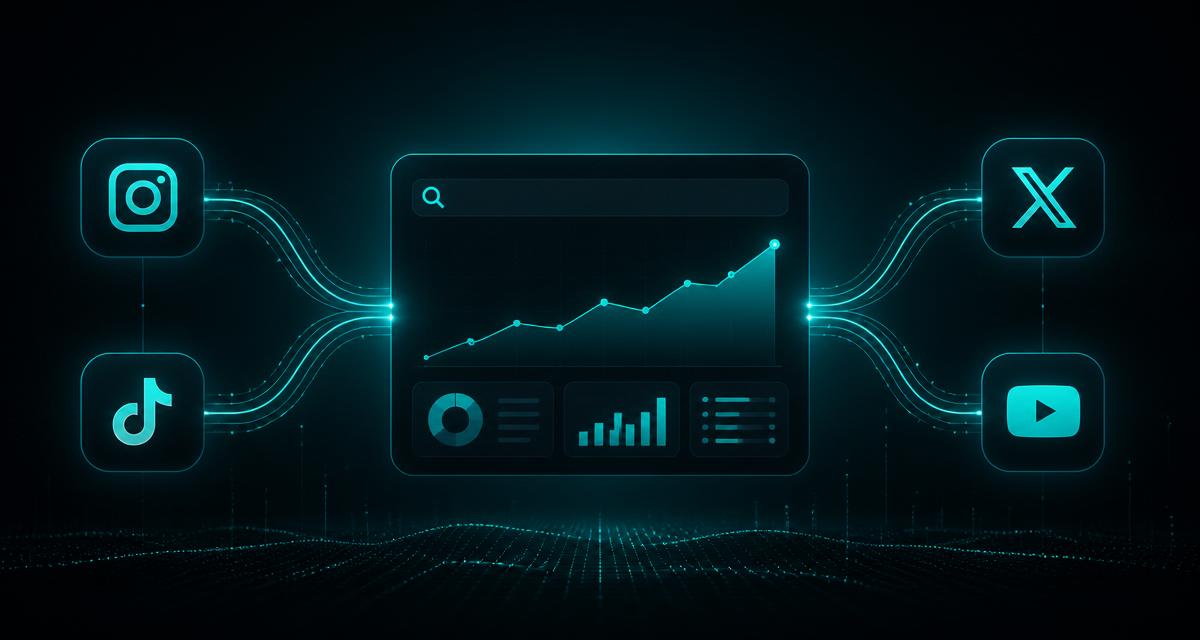
On July 7, 2026, Google announced Platform Properties in Search Console, a new property type that allows users to track how their Instagram, TikTok, X, and YouTube content performs on Google Search and Discover. Until now, Search Console was largely seen as a tool for monitoring website performance on Google. With this update, Google is officially expanding Search Console beyond websites and into social and video content discovery.
This is not a small feature update. It is a clear signal that modern search visibility is no longer limited to website pages. A brand's YouTube videos, Instagram posts, TikTok content, and X posts can now be treated as measurable search assets.
For brands, this means one thing clearly: your search presence is no longer just your website. This is the same multi-surface shift we cover in our AI Search Optimization guidance.
What Has Google Announced?
Google has introduced a new Search Console property type called Platform Properties.
This allows creators, publishers, and brands to add their supported social and video accounts to Search Console and monitor how people discover that content through Google Search. According to Google, users can now track which search terms lead people to their Instagram, TikTok, X, and YouTube content, and see how audiences interact with those posts through Google Search and Discover.
The supported platforms currently include:
| Platform | Supported in Search Console Platform Properties |
|---|---|
| Yes | |
| TikTok | Yes |
| X | Yes |
| YouTube | Yes |
This means that if your brand has a YouTube channel, Instagram account, TikTok account, or X profile, you can potentially add each of these as a separate property in Search Console and start seeing Google-driven performance data.
What Data Can Brands See?
Once a platform property is added and verified, Search Console can show reports for that specific platform account or channel.
Google has mentioned three key reporting areas:
1. Performance Report
The Performance report shows key metrics such as:
- Total clicks
- Impressions
- Average click-through rate
- Average search position
- Top posts
- Top queries driving traffic
This is extremely valuable because brands can now understand which social or video posts are getting visibility from Google Search, Discover, and Google News, where applicable. Google also notes that Discover and Google News reports will only appear if the content receives traffic from those surfaces.
For example, a wellness brand may discover that a YouTube video on "best magnesium supplement for sleep" is getting Google Search impressions even when the brand's website page is not ranking strongly for that query.
That changes how teams should think about content performance.
2. Insights Report
The Insights report gives a high-level overview of recent traffic trends, top-performing content, and how people discover platform content on Google Search.
This is likely to be useful for founders, marketing heads, content teams, and brand teams who do not want to go deep into every query-level report but still want to understand what is working.
3. Achievements
Google will also show milestones and growth achievements, such as reaching a new click threshold from Google Search in the last 28 days.
This may look simple, but it can help content teams understand whether their social and video content is becoming more discoverable on Google over time.
What This Update Does Not Do
This update does not replace Instagram analytics, TikTok analytics, YouTube Studio, or X analytics.
Google's documentation clearly states that platform properties only show how content performs on Google Search. They do not show how people interact with the content inside the native platform itself. For example, Search Console will not show how many times a video appeared inside TikTok.
So the distinction is important:
| Native Platform Analytics | Search Console Platform Properties |
|---|---|
| Shows performance inside Instagram, TikTok, YouTube, or X | Shows performance from Google Search, Discover, and News where applicable |
| Useful for engagement, followers, watch time, reach | Useful for search visibility, queries, impressions, and clicks |
| Platform-first view | Search-first view |
In simple terms, this update does not tell you how your Instagram post performed on Instagram. It tells you how that Instagram post performed on Google.
Why This Is a Big Shift for Search
For years, SEO reporting has been centered around websites.
Teams tracked:
- Website rankings
- Website clicks
- Website impressions
- Website landing pages
- Website conversions
But user behavior has changed.
Today, people discover brands through a mix of Google Search, Google Discover, YouTube, Instagram, TikTok, Reddit, X, publisher websites, review platforms, AI search engines, and AI assistants such as ChatGPT, Gemini, Perplexity, and Google AI Overviews.
Google's own announcement recognizes that creators and publishers use many channels beyond their own websites to reach audiences. Google also mentions that people are gravitating toward firsthand perspectives and different content formats.
That line is important.
It means Google understands that the open web is no longer just websites and blogs. The open discovery layer now includes videos, social posts, creator-led content, community discussions, and platform-native content. These are the same surfaces tracked across the major AI search platforms.
This is exactly why brands need to move from traditional SEO thinking to multi-surface search visibility.
The Website Is No Longer the Only Search Asset
Earlier, brands would ask: "Is our website ranking on Google?"
Now, the better question is: "Is our brand discoverable across every surface where customers search, compare, and make decisions?"
A brand's visibility can now come from multiple assets:
| Asset Type | Example |
|---|---|
| Website page | Product page, category page, blog |
| YouTube video | Explainer, comparison, demo, review |
| Instagram content | Reel, carousel, profile content |
| TikTok content | Short-form educational or product-led video |
| X post | Founder insight, announcement, public conversation |
| Reddit thread | Community recommendation or discussion |
| Publisher article | Third-party listicle, review, comparison |
| AI answer citation | Brand cited in ChatGPT, Gemini, Perplexity, or AI Overviews |
This update from Google makes social and video content more measurable as part of search visibility.
For brands, this means content strategy can no longer sit in separate silos. SEO, social, video, content, PR, community, and AI visibility teams need to work together.
Why Brands Should Care
This update matters because it gives brands a new way to measure search demand around social and video content.
1. Brands Can See Which Social Posts Are Getting Google Visibility
A brand may be creating hundreds of Instagram posts, TikTok videos, and YouTube videos, but until now, it was difficult to understand which of those assets were being discovered through Google.
With platform properties, brands can start identifying which YouTube videos are getting Google Search impressions, which Instagram posts are appearing in Google Search, which TikTok videos are attracting search clicks, and which X posts are being discovered through search queries.
This helps content teams understand which assets are not just engaging inside the platform, but also becoming discoverable on Google.
A reel may perform moderately on Instagram but still rank or appear for high-intent Google searches. Similarly, a YouTube video may continue driving Google visibility long after its initial upload date.
2. Brands Can Discover Search Queries Behind Social and Video Content
The biggest value of Search Console has always been query data.
Now that query-level visibility is coming to platform content, brands can understand what people searched before discovering their social or video content.
For example, a skincare brand may find that its TikTok video is getting impressions for queries such as "best sunscreen for oily skin", "sunscreen for acne prone skin", "mineral vs chemical sunscreen", and "sunscreen for Indian summer".
A fitness brand may find that its YouTube video is getting impressions for "best protein powder for beginners", "whey protein vs plant protein", "how much protein do women need", and "best post workout supplement".
This query data can directly influence blog strategy, YouTube strategy, Instagram content calendar, TikTok scripts, product page optimization, FAQ creation, AI search optimization, and publisher and PR strategy. A tool like our AI Prompt Generator can help you turn this query data into testable AI search prompts.
In other words, social and video content can now become a search insight engine.
3. Brands Can Identify Non-Website Content That Influences Decisions
Customers do not always make decisions after visiting a website. They compare brands across YouTube reviews, Reddit threads, Instagram reels, TikTok videos, influencer posts, and AI-generated answers.
For many categories, especially research-heavy categories, the decision journey is already distributed. This includes nutraceuticals and supplements, skincare and beauty, healthcare and wellness, education, BFSI, consumer electronics, home improvement, travel, fashion and lifestyle, and SaaS and B2B tools.
For these categories, a customer may search on Google and discover a YouTube comparison video before they ever visit the brand's website. That YouTube video may influence the purchase decision more than the product page itself.
This is why tracking only website search performance is no longer enough.
4. Social and Video Content Can Now Be Treated as Search Inventory
One of the most important implications of this update is that social and video posts should no longer be seen only as engagement assets. They are now searchable assets.
That means every brand should start thinking about social and video content with search intent in mind.
Instead of only creating content around "5 reasons our product is amazing", brands should create content around real search and decision-making questions like: Which product is best for beginners? What is the difference between Product A and Product B? Is this product safe? How long does it take to see results? What should I choose if I have a specific problem? What are the pros and cons? What do experts recommend?
This is the type of content that can perform across Google, YouTube, social platforms, and AI search engines.
5. This Strengthens the Case for AI Search Optimization
The rise of AI search has already changed how brands think about visibility.
AI engines do not only use brand websites. They often refer to and cite third-party articles, Reddit threads, YouTube videos, reviews, comparison pages, community discussions, product pages, expert content, and social and creator-led content.
Google's new Search Console update reinforces the same larger trend: discovery is becoming multi-surface. You can track how often your brand is cited across these surfaces with the AI Citation Index.
The future of brand visibility is not just about ranking one website page on Google. It is about being present, consistent, and credible across all the surfaces that search engines and AI engines use to understand and recommend brands, including owned channels, controlled channels, third-party channels, community platforms, social platforms, video platforms, and AI answer engines.
This is where brands need a new operating system for search visibility.
How This Changes SEO Strategy
This update should push SEO teams to rethink how they plan, measure, and optimize content.
Traditional SEO strategy usually looked like this: find keywords, create website pages, optimize content, build links, track rankings and traffic. That is still important, but it is incomplete.
Modern search strategy should look more like this:
- Identify high-intent search prompts and queries
- Understand where users are discovering answers
- Map each query to the right content format
- Create content across website, YouTube, social, and third-party surfaces
- Track performance across Google, AI search, and platform-level discovery
- Improve content based on citations, sentiment, visibility, and conversion impact
This means the same customer question may need multiple content assets. For the query "best running shoes for flat feet", a brand may need a website category page, a blog comparison guide, a YouTube explainer, an Instagram reel, a TikTok short video, expert quotes on publisher websites, Reddit/community visibility, FAQ content, and AI-optimized answer blocks.
The goal is not just to rank one page. The goal is to become the most trusted answer across the discovery journey.
What Brands Should Do Now
Here is a practical action plan for brands.
Step 1: Add Supported Platform Properties in Search Console
Brands should add their official Instagram, TikTok, X, and YouTube accounts as platform properties in Search Console wherever available. Google says the feature is rolling out gradually, so it may not be available to everyone immediately. Once a property is added, it may take a few days for data to appear.
Each account or channel should be added as its own property. For example, a brand may add a main website property, a YouTube channel property, an Instagram account property, a TikTok account property, and an X account property. This will help teams track each surface independently.
Step 2: Identify Top Queries Driving Social and Video Discovery
Once data starts appearing, brands should review which queries are driving impressions, which queries are driving clicks, which posts are getting the highest CTR, which posts are ranking for non-brand searches, and which posts are appearing for decision-stage queries.
The most valuable queries are usually non-brand and high-intent.
| Query Type | Example | Why It Matters |
|---|---|---|
| Brand query | "Brand X protein powder" | Measures existing brand demand |
| Category query | "best protein powder for women" | Shows discovery opportunity |
| Comparison query | "Brand X vs Brand Y" | Shows purchase intent |
| Problem-led query | "how to improve sleep naturally" | Shows educational demand |
| Review query | "Brand X review" | Shows decision-stage behavior |
Step 3: Compare Website vs Platform Visibility
Brands should compare which queries are driving traffic to the website and which queries are driving traffic to social or video content. This will reveal important gaps.
| Query | Website Ranking | YouTube Visibility | Instagram Visibility | Action |
|---|---|---|---|---|
| best collagen supplement | Weak | Strong | Medium | Create stronger website content |
| how to use creatine | Medium | Strong | Weak | Create Instagram/TikTok explainers |
| Brand X review | Strong | Weak | Weak | Create video testimonial content |
| Product A vs Product B | Weak | Weak | Weak | Create comparison content |
This is where the update becomes strategically powerful. It lets teams understand which surface is winning for which type of query.
Step 4: Build Search-Led Social and Video Content
Social content calendars should not be built only around trends, festivals, offers, or engagement ideas. They should also be built around search demand.
For every important product category, brands should create social and video content for best product queries, comparison queries, problem-solution queries, how-to queries, review queries, safety queries, pricing and value queries, ingredient or feature-led queries, use-case queries, and myth-busting queries. Our AI FAQ Generator can help turn these questions into structured, answer-ready content.
This makes social and video content more discoverable beyond the native platform.
Step 5: Use Platform Search Data for AI Search Strategy
The same queries that drive Google discovery often overlap with prompts users ask AI search engines. A Google query like "best supplements for women over 40" can become an AI search prompt like "What are the best supplements for women over 40 in India?" or "Compare the top supplements for women above 40 based on ingredients, safety, and reviews."
Brands should use platform property data to identify real search demand and convert it into AI search optimization opportunities. This can inform prompt tracking, content recommendations, YouTube optimization, publisher strategy, Reddit/community strategy, FAQ creation, brand answer optimization, and sentiment improvement.
What This Means for DareAISearch
For DareAISearch, this update supports a core belief we have held from the start: search visibility is no longer limited to traditional website SEO.
Brands now need visibility across traditional Google Search, AI search engines, social platforms, video platforms, Reddit and communities, publisher citations, review ecosystems, and owned website assets.
Google's Platform Properties make one part of this distributed discovery journey more measurable. But measurement alone is not enough. Brands need to know where they are visible, where competitors are visible, which prompts and queries matter, which citations influence answers, which content assets need to be created, which surfaces are shaping customer decisions, and what actions should be prioritized next.
That is where the future of search optimization is headed. It is not just SEO. It is AI Search Visibility, Citation Intelligence, and Multi-Surface Discovery Optimization.
Suggested DareAISearch Product Angle
This update also opens up a strong product opportunity. DareAISearch can eventually create a module around Platform Search Visibility to help brands track how their social and video content performs across Google and AI search journeys.
| Feature | What It Helps Brands Understand |
|---|---|
| Social/video search visibility | Which posts are getting discovered on Google |
| Query-to-platform mapping | Which queries trigger website vs YouTube vs Instagram visibility |
| Prompt overlap | Which Google queries overlap with AI search prompts |
| Competitor platform visibility | Which competitor videos or posts are winning search visibility |
| Content gap recommendations | What social/video content should be created next |
| Owned vs controlled channel tracking | Whether the brand is visible beyond its website |
| Decision-stage platform analysis | Which videos/posts influence purchase decisions |
This would make DareAISearch even stronger as a full-stack AI search and discovery platform.
The Bigger Picture: Search Is Becoming Multi-Format
This update is part of a much larger shift. Search is no longer only a list of blue links.
Search now includes AI-generated answers, videos, shorts, reels, social posts, forum discussions, product listings, reviews, images, maps, publisher content, expert opinions, and brand-owned pages.
Users are not just searching for information. They are searching for confidence. They want to know: Which brand should I trust? Which product is right for me? What are real people saying? What do experts recommend? What are the pros and cons? What is the safest option? Which brand is best for my specific need?
This means brands cannot depend only on ranking their website pages. They need to build a connected discovery ecosystem.
Final Takeaway
Google's new Search Console Platform Properties update is more than a reporting feature. It is a signal of where search is going.
By allowing brands and creators to track Instagram, TikTok, X, and YouTube content inside Search Console, Google is acknowledging that social and video content are now part of the search journey.
For brands, the message is clear: your website is important, but it is no longer the only search surface that matters. Your YouTube videos, Instagram posts, TikTok content, X posts, Reddit mentions, publisher citations, and AI answer visibility all contribute to how customers discover, evaluate, and choose your brand.
The brands that win the next era of search will not be the ones that only optimize webpages. They will be the ones that build visibility across every surface where customers search, compare, and decide. And that is exactly the future DareAISearch is building for.
Disclaimer: This article is intended for marketing, SEO, and digital strategy education. It summarises publicly announced Google Search Console features as understood at the time of writing. Feature availability, supported platforms, and reporting details may change as Google updates the product.
One Unified Engine for GEO and SEO.
Book A DemoWant to create your own llms.txt file?
Use the free DareAISearch llms.txt Generator to create an upload-ready file for your website in minutes.
Frequently Asked Questions
What are Platform Properties in Google Search Console?
Which platforms are supported by Search Console Platform Properties?
Does this replace Instagram, TikTok, YouTube, or X analytics?
What data can brands see in Platform Properties?
Why does this update matter for AI search visibility?
How can DareAISearch help brands with multi-surface search visibility?
Related Reads
OpenAI Introduces Businesses in ChatGPT: What Brands Should Do Next
9 min readAI SearchGoogle Is Making AI Search Links More Visible. Here's What It Means for Brands.
7 min readAI SearchFestive Shopping Is Becoming AI-Led: What Indian D2C Brands Should Do Now
13 min readAI SearchGoogle Search Console Can Now Measure Multimodal Search: Why Visual Discovery Just Became a First-Class SEO Metric
8 min readCheck Your AI Search Visibility
Find out how your brand appears across ChatGPT, Gemini, Perplexity, and Google AI Overviews.